 Floating Aerators Ireland
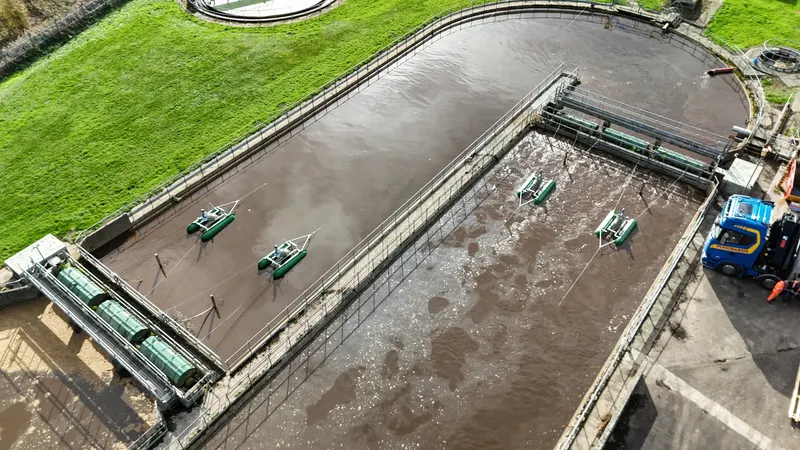
New units, supplied and installed
Floating aerators for wastewater treatment in Ireland
Floating Aerators Ireland supplies and installs new floating surface aerators for wastewater treatment systems across Ireland. They go into an existing tank or basin without emptying it, add the oxygen the treatment needs and keep solids moving. Send an enquiry to get started.
Last updated
- Unit sizes across the range we supply
- 1.1 to 55 kW
- Tank and basin depths we cover
- 0.5 to 5 m
- Floating units install in a working tank
- No emptying
- New units with the manufacturer warranty
- New, with warranty
Who we work with
Who are floating aerators for?
- 01
Public wastewater treatment works
Aeration tanks, oxidation ditches and activated sludge lanes at urban treatment plants.
- 02
Small and rural treatment systems
Village, housing estate, hotel and group scheme treatment plants that need more oxygen.
- 03
Food and dairy processing
Effluent treatment and balancing tanks that swing with production.
- 04
Industrial effluent
Process water treatment, cooling of hot effluent and stripping of odorous gases.
- 05
Balancing and buffer tanks
Keeping stored wastewater mixed and fresh before it goes to treatment.
- 06
Sludge holding tanks
Keeping sludge aerobic and mixed to limit odour before it is taken away.
The principle
How does a floating aerator work?
A floating aerator sits on the surface of a wastewater treatment tank or basin. Its impeller either churns the surface hard or lifts water up through a cone or draft tube and throws it into the air. Oxygen from the air dissolves into the water as it falls back.
That steady supply of oxygen feeds aerobic bacteria, which break down organic pollution (BOD removal) faster, and the mixing keeps solids from settling out. The unit is tethered by cables to the walls or anchors, so it rides up and down with the water level.
The floating aerators we supply work in water 0.5 to 5 m deep.
Against fixed and subsurface systems
Why choose a floating aerator?
- 01Fast, flexible installationUnlike submerged diffusers, floating aerators go into an existing tank or basin without emptying it. They attach to anchored mooring cables.
- 02ScalableMove a unit to clear a dead zone, or add units as the load on the works grows.
- 03Lower capital costNo concrete bridges, no grid piping in the tank and no blower house.
- 04Easy accessThe motor and main parts sit above or at the waterline, so they can be checked without diving or stopping the process.
- 05Strips unwanted gasesThe splashing action helps drive dissolved gases such as hydrogen sulfide and methane out of the wastewater.
The range
What does Floating Aerators Ireland offer?
Floating aerators and aerator mixers
Spiral Aerator
Float mounted aerator mixer on twin pontoons, 1.1 to 22 kW, for aeration tanks, oxidation ditches and sludge holding tanks at treatment works.
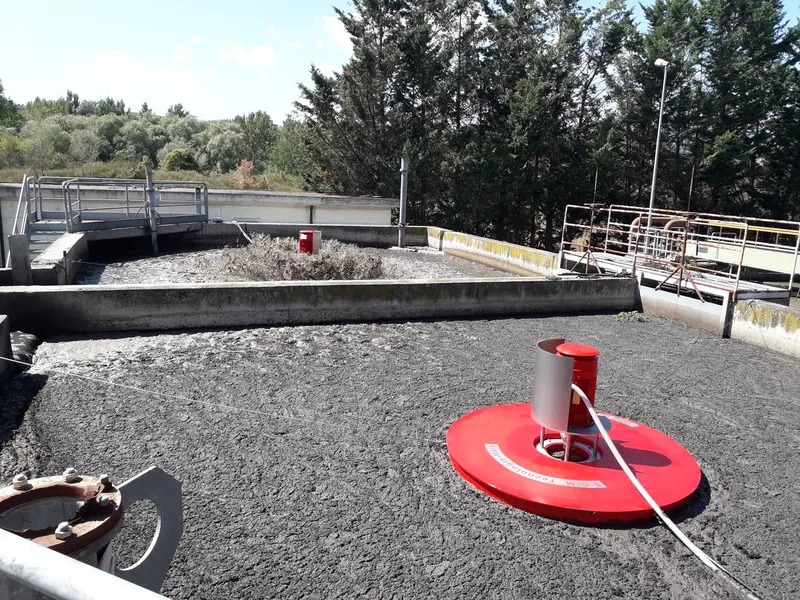
High speed floating aerator
Round float with a direct drive vertical motor, 2.2 to 55 kW, for treatment tanks and basins whose level rises and falls.
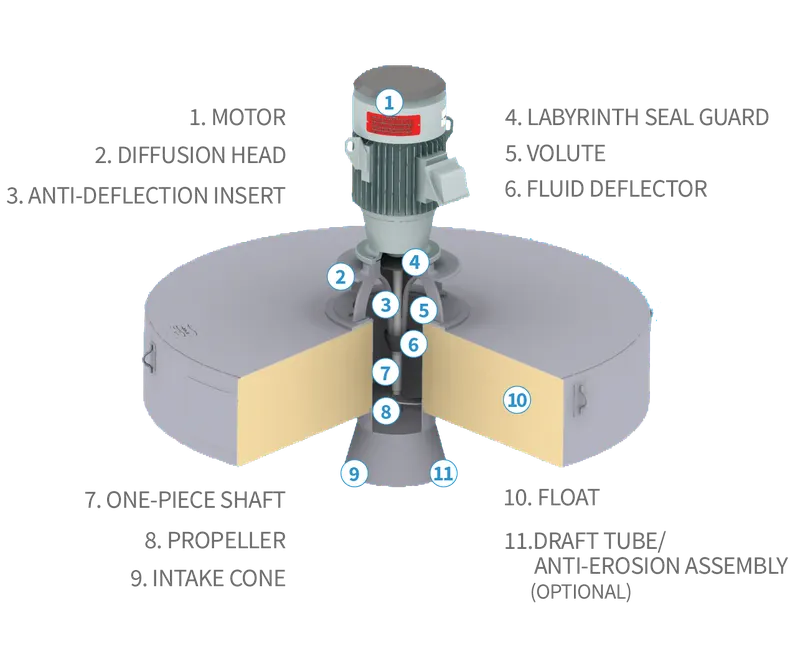
Aqua-Jet surface aerator
High speed floating surface aerator with an intake cone, volute and diffusion head, and an optional draft tube to mix the full depth of the tank.
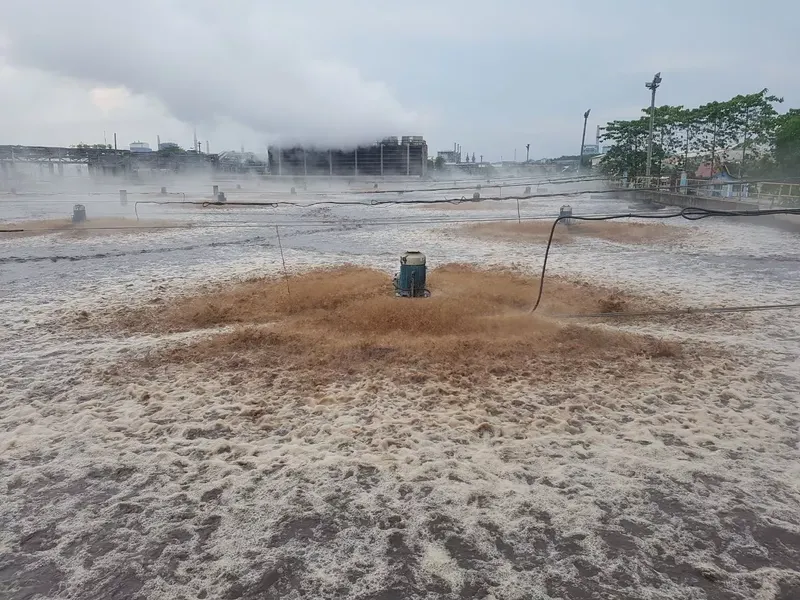
Stainless steel floating aerator
All stainless floating surface aerator with a flat, low aerosol spray, for treatment tanks and basins from 0.6 m to 5 m deep.
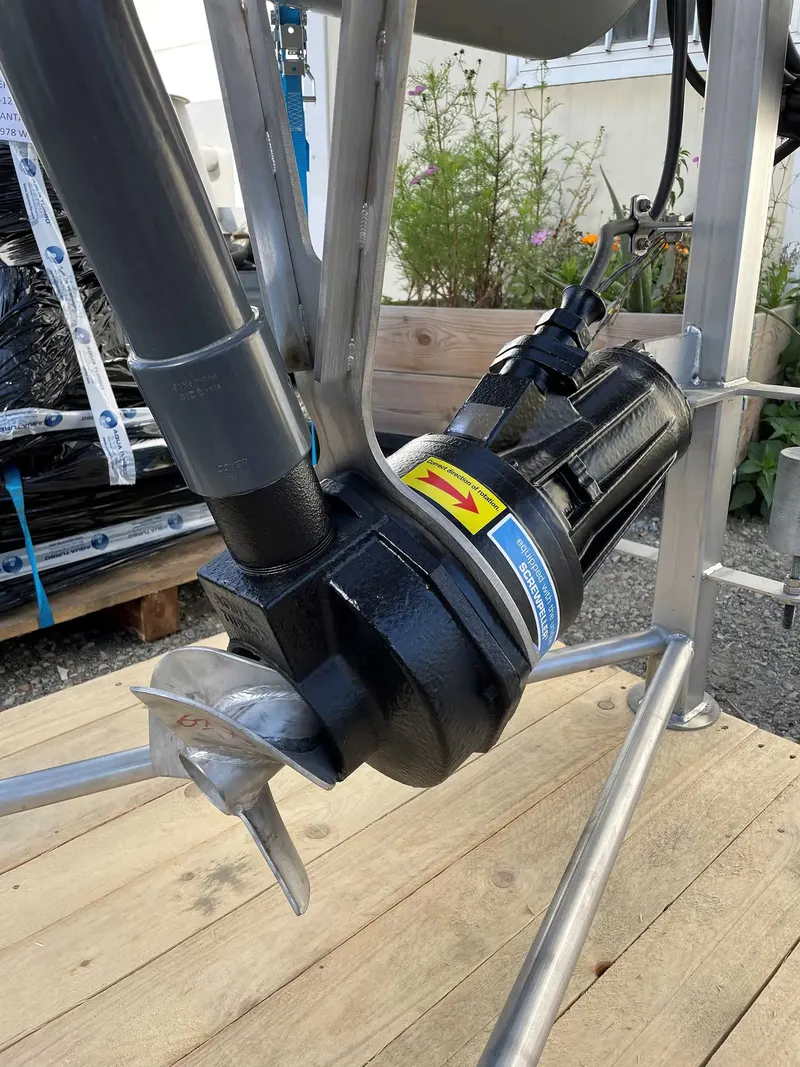
Directional aerator mixer
Self aspirating aerator on a floating frame that pushes a current across the tank, 1.5 to 30 kW, quiet and with no spray.
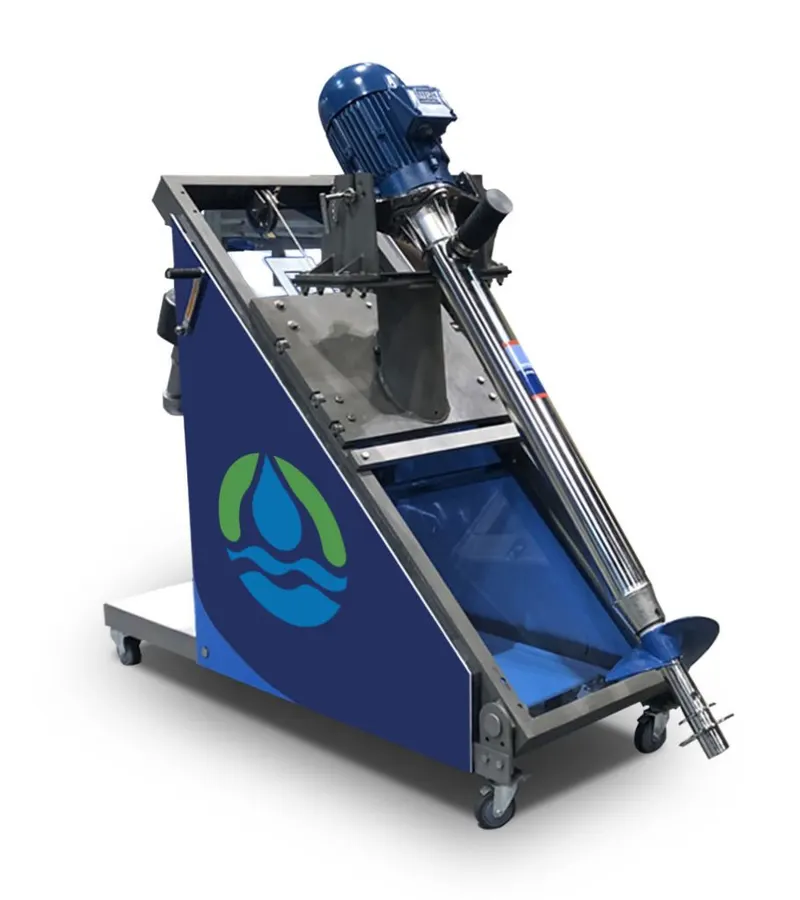
Triton aerator mixer
Aspirating propeller aerator mixer that can run in aeration or mixing only mode, for aeration tanks and oxidation ditches.
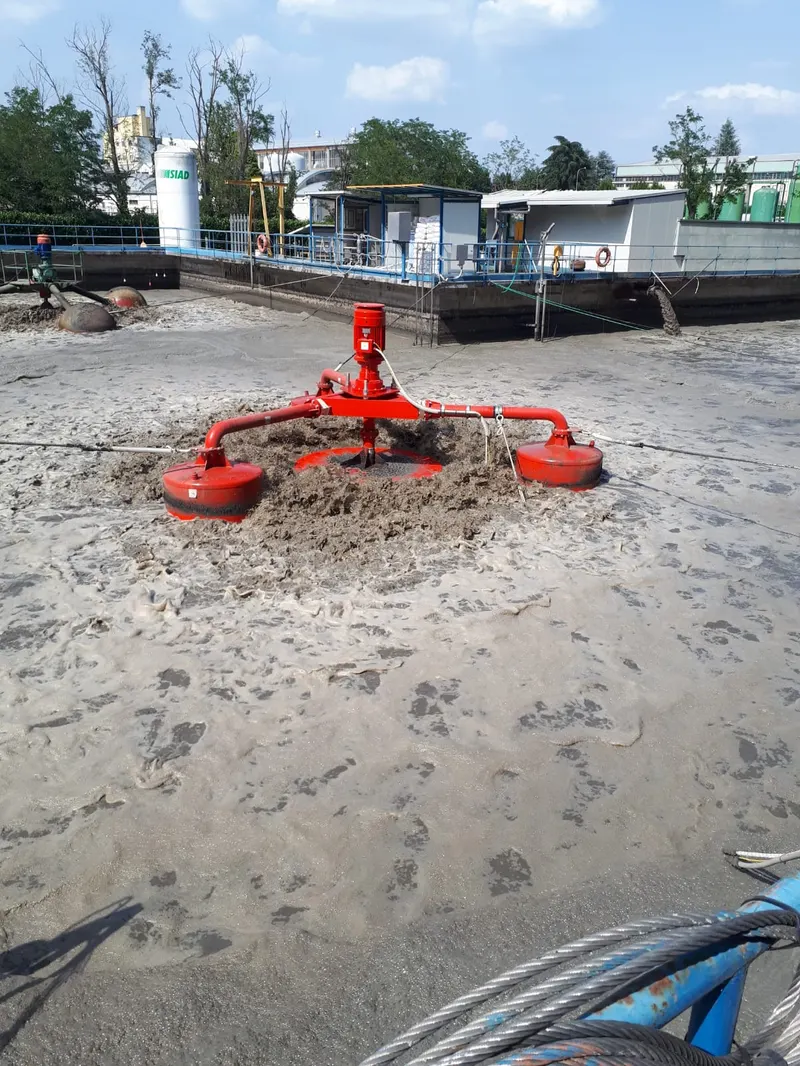
Low speed surface aerator
Gearbox driven turbine aerators that move large volumes of water per kW, for activated sludge tanks and oxidation ditches up to 5 m deep.
Sizing and installation
Sizing and installation
We work out the oxygen demand from your figures, pick the unit and install it with anchored mooring cables, without emptying the tank.
Pick one device or add several to your enquiry list. We reply with sizes, moorings, cabling, delivery and installation for your site.
Choosing
Which type of aerator suits your tank?
| High speed floating | Low speed surface | Aspirating aerator mixer | |
|---|---|---|---|
| Best for | Tanks and basins with a changing level | Large activated sludge tanks, oxidation ditches | Mixing plus oxygen, anoxic zones, channels, sludge tanks |
| Water depth | 0.5 to 5 m | Tanks up to 5 m | 0.5 to 5 m |
| Follows water level | Yes, floats | Only if float mounted | Yes, floats |
| Capital cost | Lower | Higher | Medium |
| Spray and aerosol | Wide spray (flat spray units available) | Moderate | Little or none |
| Example models | High speed floating aerator, Aqua-Jet, stainless steel floating aerator | Low speed surface aerator | Spiral Aerator, directional aerator mixer, Triton |
Rough sizing
How much aeration does your tank need?
Enter the size of your tank (0.5 to 5 m deep) for a first idea of the installed power. We then size it properly from the load you describe in your enquiry.
How a project runs
What happens after you send an enquiry?
Tell us about the tank
Size, depth, what flows in and what your licence asks for. A rough figure is enough to start.
Sizing and proposal
A written proposal with unit sizes, the working behind them and the running cost.
Supply and install
Units go into the working tank on anchored moorings. No emptying, no concrete works.
Handover and warranty
We commission the units with you and hand over the manufacturer warranty and documents.
Frequently asked questions
What is a floating aerator?
A floating aerator is a motor driven unit that sits on the surface of a wastewater tank or basin. It churns the surface or throws water into the air so oxygen dissolves into it. That oxygen feeds the bacteria that break down organic pollution, and the mixing keeps solids from settling.
Where are floating aerators used in Ireland?
Mainly at wastewater treatment works and in treatment systems: aeration tanks, oxidation ditches, activated sludge lanes, balancing and buffer tanks, sludge holding tanks, and food, dairy and industrial effluent treatment.
Can a floating aerator be added to an existing treatment tank?
Yes. Floating aerators are lowered into the working tank and held by three or four cables to the walls or to anchors, so treatment carries on. They are a common way to add oxygen when a works has grown or a blower system is struggling.
What tank depth suits a floating aerator?
The units we supply work in water 0.5 to 5 m deep. Tanks deeper than 5 m are better served by other aeration systems, so we do not offer floating aerators for them.
Do you have to empty the tank to install one?
No. Floating aerators go into a working tank and rise and fall with the level. They can also be moved later to reach dead zones.
How many kW does a treatment tank need?
It depends on the oxygen demand of what flows in and on how well the tank must be mixed. As a rough guide, partial mix basins need about 1 to 2 W per m3 and complete mix tanks about 5 to 8 W per m3. We size every job from your load and tank, and show the working.
How much oxygen does a surface aerator add per kWh?
Manufacturers quote about 1.2 to 2.4 kg of oxygen per kWh in clean water tests. In real wastewater the figure is usually 50 to 70 percent of that, which is why sizing uses field values.
High speed or low speed surface aerator?
High speed floating units are direct drive, cost less and suit tanks whose level changes. Low speed units turn a large turbine through a gearbox, move more water per kW and suit large activated sludge tanks and oxidation ditches.
Can floating aerators be used in balancing and sludge holding tanks?
Yes. In balancing tanks they keep stored wastewater mixed and fresh before treatment. In sludge holding tanks they keep sludge aerobic and mixed, which limits odour.
Can better aeration help a treatment works meet its discharge licence?
Often, yes. Biological treatment needs enough oxygen to remove BOD and ammonia. A works that is short of oxygen, or poorly mixed, is more likely to breach its emission limits, and adding sized floating aeration is one of the quickest fixes.
Do aerators help with odour at a treatment works?
Keeping a tank aerobic is the main way to avoid the septic conditions that cause odour, and the splashing of surface aerators also drives out dissolved gases such as hydrogen sulfide.
What happens to floating aerators in frost?
Running aerators usually keep an area of open water. In long frosts the spray can ice floats and nearby walkways, so timers, a de-icing setting or a short shutdown are used.
Do I need a licence to discharge treated wastewater in Ireland?
Yes. Public sewer discharges are authorised by the EPA under the Waste Water Discharge (Authorisation) Regulations 2007. Industrial sites discharge under an EPA industrial emissions or IPC licence, or a local authority Section 4 licence. Good aeration helps a plant meet the limits in its licence.
Do you sell online?
No. Every site is different, so we sell by enquiry. Send the tank size, depth and what goes into it, and we will come back with a proposal.
Send an enquiry
Tell us the tank size, depth and what flows in. We reply with questions or a proposal.
Or call 087 473 6464 or email [email protected]